
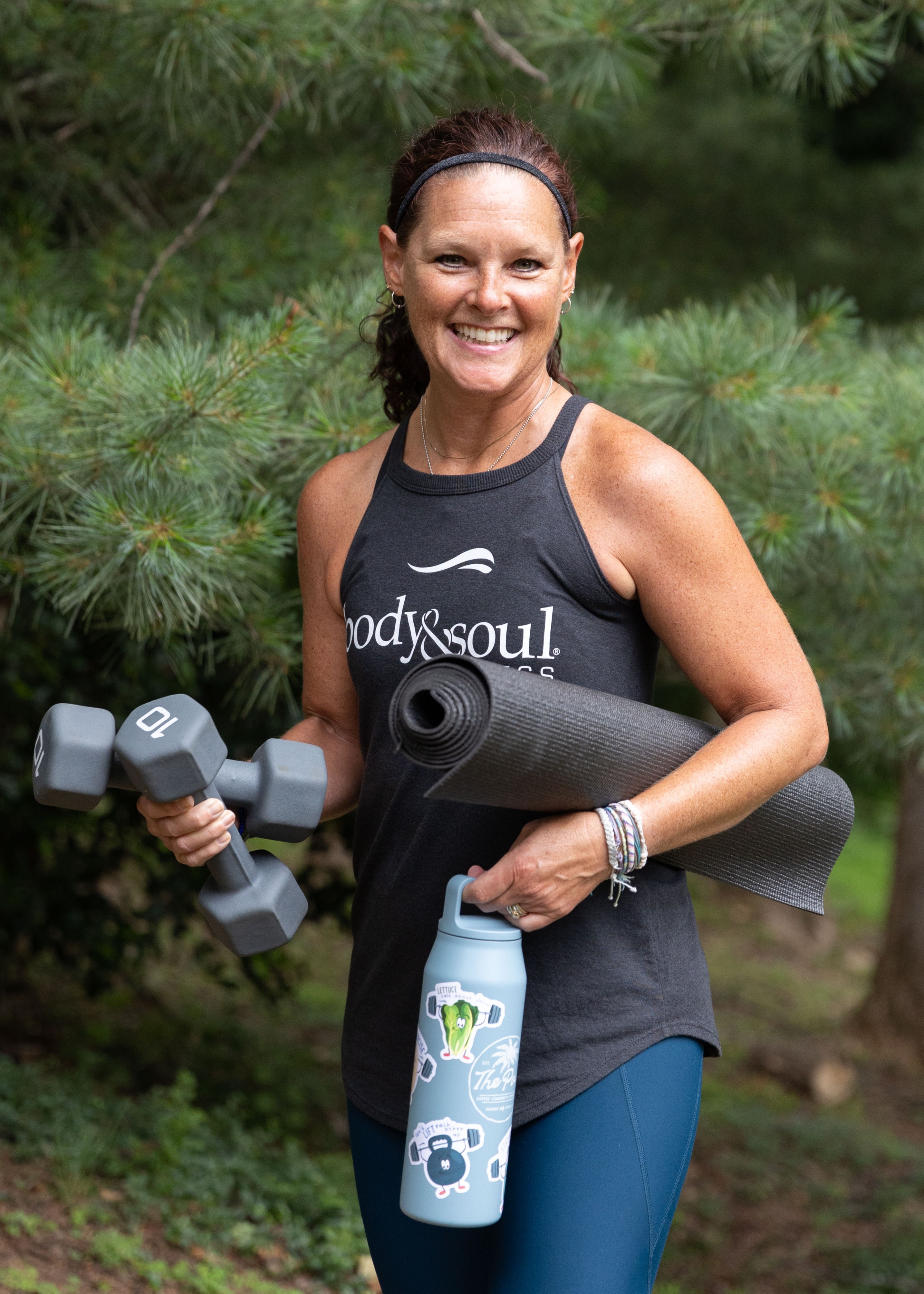
fitness fundamentals - the importance of proper hydration
Our new series, “Fitness Fundamentals” will focus on topics which are essential to an effective exercise routine, but are often skipped over in our fast-paced world. Here at Body & Soul®, we are so much more than just exercise classes, so taking intentional time to educate ourselves on the ‘why’ behind our fitness programs seems like time well spent. Our first fundamental is hydration - why should we hydrate and how do we do it well?
You are continuously hearing from your instructor, “hydrate!”, but why? Why does she remind you multiple times during your workout and why does she give you a quick break to make sure you take a moment to get a deep drink from your water bottle? Though the percentage varies with several factors such as age and body type, the adult human body is around 60% water, and it is crucial to maintain proper hydration to keep the body functioning correctly. Some of these functions include lubricating the joints, delivering oxygen throughout the body, and preventing kidney damage. Proper hydration also boosts skin health and cushions the brain, spinal cord, and other sensitive tissues. It regulates body temperature, keeps the digestive system on track, maintains blood pressure, and enables minerals and nutrients to be accessible to different parts of the body. As a regular exerciser, it’s great news to hear that proper hydration boosts performance during exercise and can assist with weight management.
Amounts vary person to person, but according to the Academy of Nutrition and Dietetics, the average recommended daily intake of water from both food and drink is:
- 11.5 cups per day for women
- 15.5 cups per day for men
- 5-11 cups for children, depending on their age
And just in case you get a little bit bored and want to add to your water intake through food, a few fluid sources beyond your water bottle can consist of high-water content foods such as pineapples, oranges, watermelon, and spinach.
Now let’s focus on hydration and physical activity. According to Johns Hopkins Medicine, for every hour of activity, exercisers can lose up to 2 quarts of fluid. Becoming dehydrated puts you at risk for poor performance, headaches, cramping, and more serious complications like heat stroke. Because water cushions the joints, becoming dehydrated can affect your flexibility and speed.
During exercise, having hydrated muscles helps you have properly functioning muscles and fewer muscle cramps. During inhalation, you need body fluids to moisten the air so breathing is more effective and oxygen is easier to absorb through your lungs. Dehydration can even create mood swings and lack of concentration due to lack of water in the brain.
Keep these recommendations from Johns Hopkins Medicine in mind as you exercise:
- Drink 6-12 oz. of water for every 20 minutes of exercise.
- Drink 24 oz. of water 2 hours before the activity.
- Drink 16-24 oz. of water after exercise, depending on how much you’ve sweated.
by Amy Stafford
Panama City Beach, FL
 Amy Stafford is the President of Body & Soul® Fitness, Certified Personal Trainer, ACE faculty and ACE Group Fitness Instructor. She is a leader in the fitness industry and is a popular speaker for women's events, retreats, fitness conferences. For information on booking Amy for your event or for an interview please email This email address is being protected from spambots. You need JavaScript enabled to view it.. Amy currently resides in the Panama City Beach, FL area and teaches virtually.
Body and Soul® Fitness is an international Christian fitness organization that trains and equips instructors to lead a variety of group fitness programs including choreographed aerobics-style Cardio Strength & Flexibility™, cardio dance style Dance Blast™, free-weights-focused Power Strength™, boot camp style FIT360™ and Longevity FIT360™, and GOLD™ - lower impact programming for participants that are pregnant, have weight challenges, injuries, or other medical conditions. These exercise classes meet in church gyms, community centers, gymnasiums, parking lots, schools, etc. across the United States, Europe, and Africa. In-person and virtual fitness classes are available.
Key words: Christian fitness, women's exercise classes, group fitness, dance aerobics classes, Christian group fitness, Christian fitness app, FitTV, Body & Soul, Body and Soul, fitness instuctor training, low impact exercise